Why Your Crypto Is Not Actually On Your Wallet
Crypto wallets do not hold coins. They hold keys, show balances, sign transactions, and decide who really controls access.

Many new users open Phantom, MetaMask, Trust Wallet, Coinbase Wallet, or another extension, see a number on their screen, and wrongly assume that this number represents something that they physically possess. It is understandable: the number is local to their machine, it changes when they receive funds, and it decreases when they send funds. Their brain lazily concludes that their crypto is in their wallet.
This is incorrect.
Not incorrect in the sense of "calling Wi-Fi the Internet", but in the same sense that calling a bank account a vault is incorrect. It is wrong in the way that affects your options for customer support, your ability to recover from a phone wipe, your risk of funds theft, your options when a centralized exchange freezes your withdrawal, and the way one rogue signature can drain everything you owned. A crypto wallet is not a vault or a bank account or a cash register. It is a keychain with a calculator and a very dangerous pen glued to it.
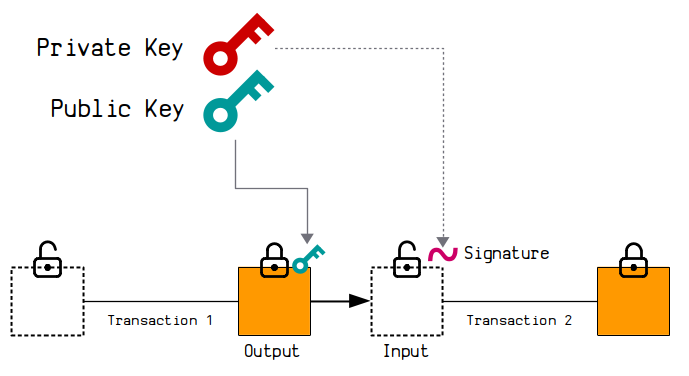
The coins are not in Phantom. They are not in the Ledger. They are not in MetaMask. They are not in the Coinbase app. What is in these apps is a record of a balance associated with a particular address stored on a blockchain, which in turn is maintained by a network of nodes. Your Phantom wallet contains the private keys that can be used to sign transactions, spending the coins associated with particular addresses.
This is all very nuanced, but it becomes relevant the moment something goes wrong. This is why we need to understand the wallet mechanics.
Word Wallet Is the Trap
The word wallet itself is a trap, one that has ensnared the minds of crypto users everywhere. The term is familiar, easy to understand, and intuitive in the context of physical items. A wallet is a piece of plastic with some cash, credit cards, and ID in it that you carry around with you. If you lose it, you can expect to lose whatever was in it as well.
Crypto adopted the word because it was familiar and intuitive. Most users do not have a problem visualizing a wallet as a location where crypto can be stored. However, the word comes with connotations and associations that do not extend to actual physical wallets. It suggests that crypto assets are stored in the wallet application or a hardware device as data or files. It implies that a wallet is a self-contained unit where you can put your coins in and take them out of at will, where you can backup and restore individual items, and where you can secure your assets by, say, wiping the application data. It suggests that a crypto wallet is a vault, which it is not.
A crypto wallet is more akin to a keychain with a calculator and a very dangerous pen glued to it.
When you send crypto to an address, you are not putting coins in a digital vault. You are instructing the network to update the blockchain so that it reflects that the coins are now associated with a different address. When you send coins from your wallet, your device is not transferring data from one place to another. It is calculating a cryptographic signature that proves to the network that you are authorized to make the transaction, and the network updates the blockchain to reflect the new balance. Nothing is transferred: values are simply updated.
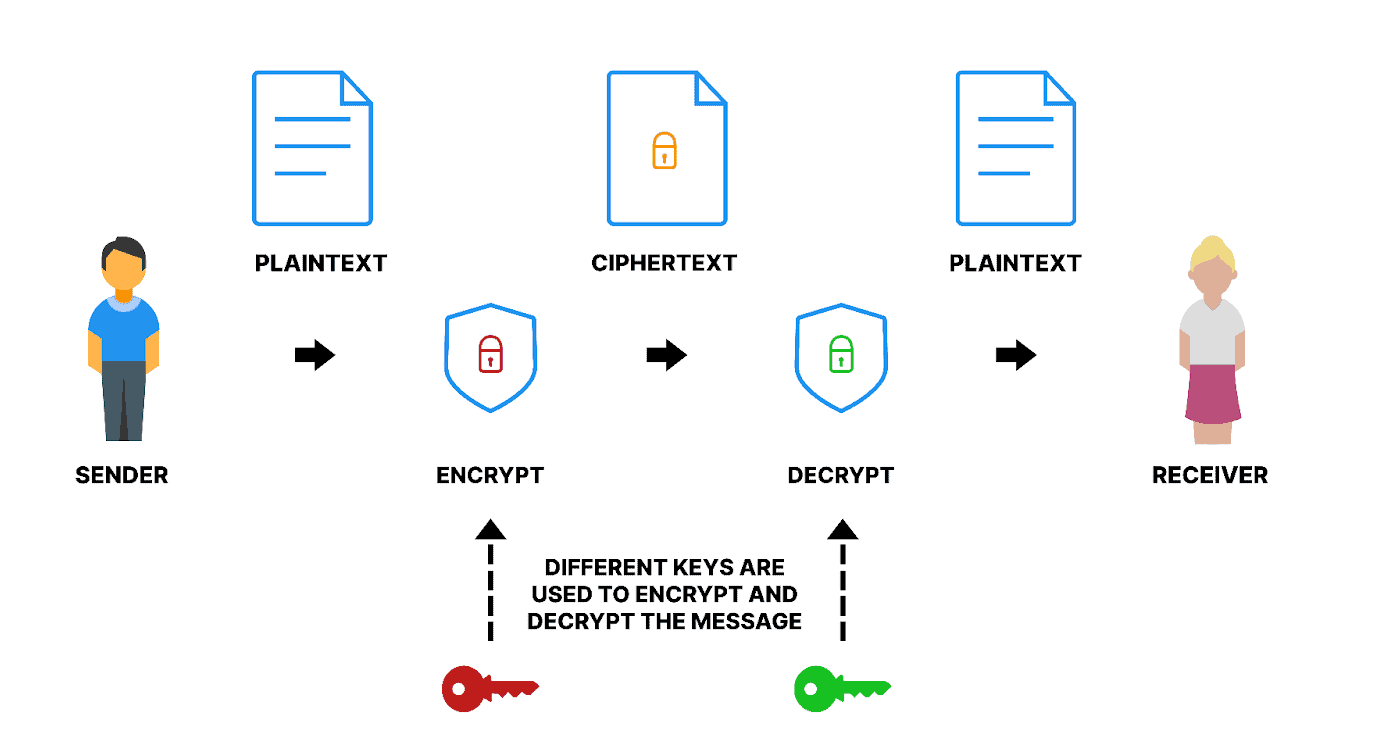
This is why you can delete your wallet application, reinstall it, import the same mnemonic phrase, and see the same coins on your new wallet: because they never left your old one in the first place. The application only serves to prove that you control the keys that control the addresses associated with coins on the blockchain. Your coins are not stored on your phone, not stored on the wallet application server, and not on the blockchain itself. The keys are on your device, which is why deleting the app data or formatting your phone will wipe them, unless you have a proper backup.
Coinbase Is Not the Same Kind of Wallet
The Coinbase exchange product presents its own set of challenges due to the nature of the custody solution it offers. The Coinbase brand name itself can be a source of confusion for the end-user: a Coinbase exchange account is a custodial wallet, while the Coinbase Wallet, previously known as the Coinbase App, is a self-custody wallet. The latter product, Coinbase Wallet, is now rebranded as a part of the Base app ecosystem.
If you log into the main Coinbase exchange with an email, password, two-factor code, and identity verification, you’re operating a custodial account. Coinbase holds the private keys to the crypto assets it hosts for you. Your account balances are available for you to view, but your relationship to those assets is closer to that of a claimant against Coinbase’s custody than an owner of a blockchain address. You are requesting that Coinbase buy, sell, withdraw, or send crypto on your behalf, and Coinbase’s systems are deciding whether those requests are valid, available, compliant, and authorized.
This is why Coinbase can assist you in recovering your account if you lose access to your password. It’s also why Coinbase can freeze withdrawals, respond to court orders, detect and halt suspicious activity, and demand additional authentication. Those are all privileges inherent to the position of an account custodian. If someone else can restore your crypto assets for you, that someone has authority and control over those assets at a level comparable to your own. If someone can refuse to let you withdraw your crypto assets, your access to those assets is mediated by that someone.
In the case of the exchange, not only do you not have control of the crypto assets you see in your account, you don’t even have the cryptographic keys that give control of those assets. This does not mean that the custody solution is inherently malevolent or ineffective. Having someone else hold your keys can be convenient, safe, and empowering, particularly for someone who would have difficulty, for instance, memorizing or safeguarding a recovery phrase. An exchange account can offer you account recovery, auditing, customer support, and fiat on- and off-ramps. It is not self-custody, and pretending that it is self-custody leads to dangerous delusions of control.
The aphorism “Not your keys, not your coins” is intentionally dismissive of custodial solutions precisely because it punctures this balloon of convenient delusion. It does not mean that balances held by an exchange are not your coins. It means that the ability to initiate transactions on-chain is not something you control, and that you are relying on the good faith of an entity that controls it. You have an account relationship with the exchange; the exchange has signing authority over your assets.
This is also why account freezes, legal takedown requests, and exchange failures to honor withdrawals are so deeply shocking to users. Someone who thinks of their crypto assets as “coins” stored inside a “wallet” represented by a tidy little interface on their phone is likely to be blindsided by the sudden revelation that those coins are not actually anywhere, and that the pretty little interface is a portal through which another entity can revoke their access to those coins at any time.
Cold Wallets Are Not Little Safes Full of Coins
Hardware wallets suffer from the same delusion, only in the opposite direction. Exchanges encourage you to think that you have more control over your crypto than you do, and hardware wallets encourage you to think that you have less control over your crypto than you do.
A Ledger or Trezor wallet does not hold your Bitcoin the way a USB drive holds a photo. It holds cryptographic keys, or rather keeps the cryptographic secrets necessary to generate those keys. The coins themselves are still on the blockchain. What the hardware wallet does is provide a secure environment for signing transactions so that the keys never have to be exposed to a connected computer, which could be compromised by malware or phishing software. That’s why companies are starting to refer to hardware wallets as signers; the devices do not store coins, they facilitate the signing of transactions with keys that are stored elsewhere, often on the device itself.
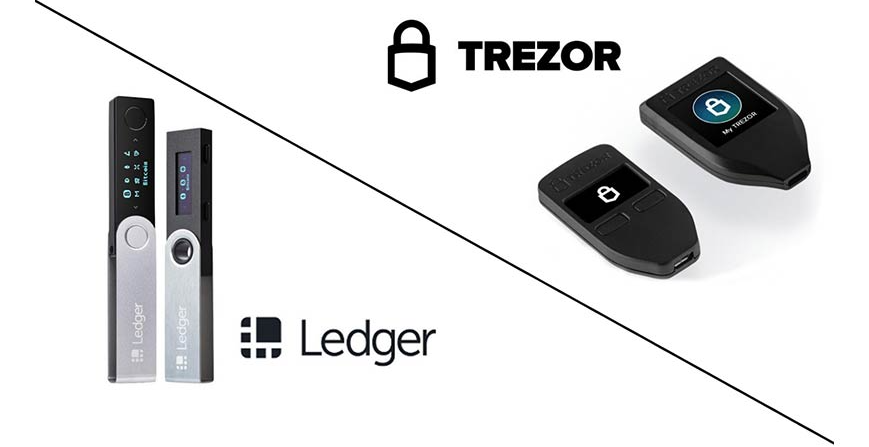
Imagine the vault analogy from earlier; a hot wallet is like keeping your key in your front pocket as you walk through the marketplace. It’s convenient, but thieves can see you have a key and can try to take it. A hardware wallet is more like keeping your key inside a little mechanical box that can only be opened by you. The connected computer can suggest a transaction, but the signing box has to approve it before the key ever leaves the box. The private key is supposed to stay inside the box.
This is tremendously secure, but it is not unassailable. If you approve a transaction on your hardware wallet, the wallet has no way of knowing that the transaction is not, in fact, an exploit. If you type in the wrong recovery phrase on a malicious website, your physical device cannot save you. If someone steals your recovery phrase, they can recreate your wallet on another device and drain your funds, hardware wallet or no hardware wallet. Your recovery phrase is not a customer-service password, it is the root cryptographic secret from which your keys are generated, and anyone who has it has effectively taken over your wallet.
Losing the physical device is inconvenient, but it is not nearly as bad as losing the recovery phrase that was used to protect it. This is where new users are especially vulnerable to the comforting embrace of the wrong analogy. A hardware wallet looks and feels like a safe, and anything that looks and feels like a safe is likely to convince you that it is one. The object itself is reassuring, but the actual value it protects is still on the blockchain, and the actual threat to that value is still the private key. The object is only valuable insofar as it protects the key, and the key is only valuable insofar as it grants access to the blockchain.
What a Wallet Actually Does
A wallet is many things, and the conflation of all those things is what poisons the minds of new users. At a high level, a wallet can generate or recover cryptographic keys, derive addresses from those keys, read the blockchain to determine account balances, construct and sign transactions, and broadcast those transactions to the network or another service that will broadcast them on your behalf.
This all sounds very dry and mechanical, but it has terrifying implications for anyone who mistakes a wallet for something else. Every one of those operations can have a human variable that defeats the entire point of a self-custody wallet.
When a wallet displays your account balance, it is interpreting that number for you. If the application is poorly written, or if you have connected it to the wrong blockchain, or if the RPC node you’re using is malicious or merely incompetent, you could be seeing an incorrect balance that does not actually represent the state of the blockchain. This is why you can have funds that appear to be missing from one wallet but present in another; the wallet did not actually read the blockchain, it read the wrong RPC node, and the RPC node was giving you incorrect information.
When a wallet asks you to sign something, it is not always asking you to send funds. It might be asking you to approve a smart contract that will spend funds later. It might be asking you to sign a message to prove ownership of an address. It might be asking you to sign a transaction whose implications you do not fully understand because a human wrote it in solidity code. The wallet is supposed to help you understand what it is asking you to sign, and it often does not do a very good job of it. It might show you hexadecimal code or the name of a contract or a button labeled “Approve all tokens” or a suspiciously cheerful “Continue,” but you should treat any request to sign as if you are writing the words of a contract directly into your soul.
Crypto wallets suffer from a design philosophy problem. The industry does not want to scare users, so it puts responsibility and risk on the user, who is then expected to read enough dry technical documentation to understand the risks. New users are overwhelmed by the abstract nouns on the screen, and they mistake the pretty number for the pretty object, and the pretty object for the pretty safe. The only thing that is safe is the boring part.
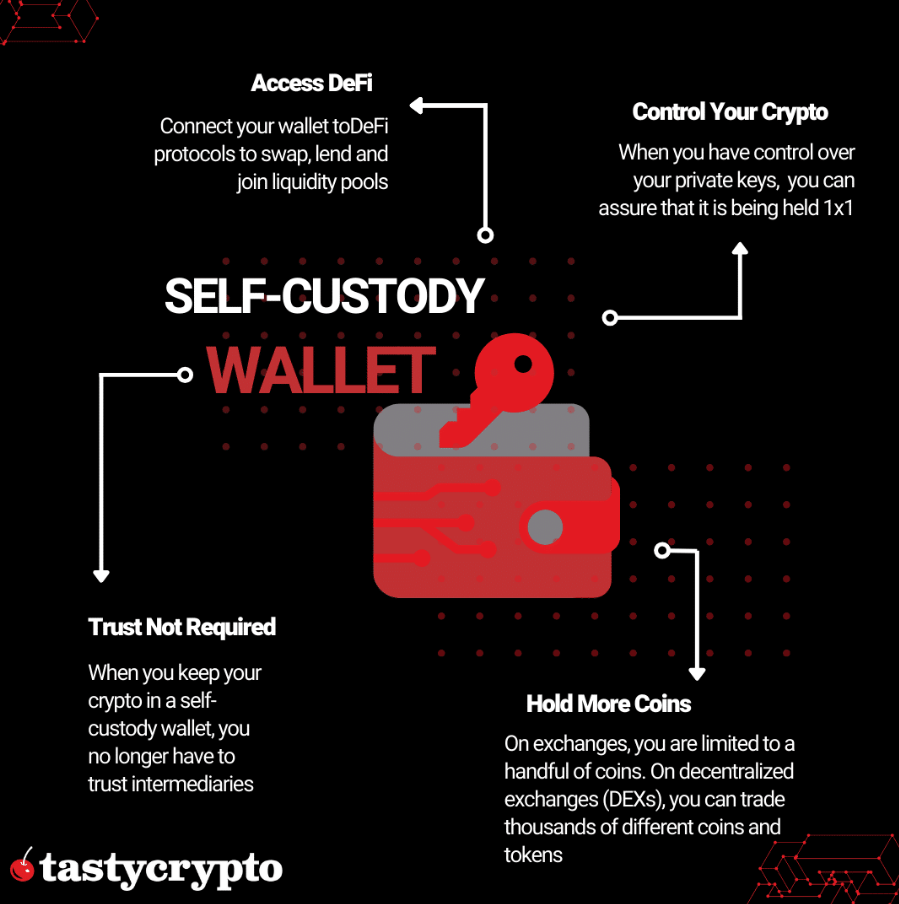
New users are right to be fascinated by the number. That number represents something they want, and it is the closest thing they have to a familiar concept in this alienating environment. But in self-custody crypto, the boring parts are the only things that matter. The number is a representation, a promise, a pointer. The actual value is secured by cryptographic keys, and those keys can only be accessed with a signature.
That is why wallet education should start with verbs. A wallet does not hold your crypto; it reads the blockchain, derives addresses, prepares transactions, asks you to sign them, and broadcasts them to the network. It is an intermediary that lets you control entries on a blockchain, but it is not the blockchain itself, and it does not possess the assets that are represented there.
Why People Prefer the Wrong Story
The wrong story persists because it is emotionally satisfying. “My crypto is on my wallet” is a comforting lie that makes you feel safe. It is easy to secure a physical object. You put your wallet behind Face ID or your Ledger behind the bedroom door. The comfort is illusory, but it is soothing nonetheless.
The true story is far more disheartening, because it exposes you to the same vulnerabilities as everyone else who has ever lost something important to a computer. Your wealth is represented as an entry on a blockchain, and your ability to modify that entry is mediated by secrets, signatures, interfaces, networks, and social engineering. You want to think of it as a safe, but it is a box with a key, and the key is in your hand, and the box is on the internet, and the internet is full of people who want to steal your things.
Nobody wants to think about that when they are buying their first $200 of Bitcoin, so they believe the comforting lie instead. So do the companies that want to sell you the safe. Exchanges prefer the wallet analogy because it hides the fact that they are custodians, and custodianship is a responsibility they are legally obligated to disclose. Wallet apps prefer the wallet analogy because it hides the complexity of cryptographic signing from the user. Hardware companies prefer the wallet analogy because a cold wallet is a much sexier product than an offline private-key signer. The industry prefers the wallet analogy because it makes crypto more approachable to mainstream consumers, who are not interested in the nuts and bolts of cryptography or decentralization.
The problem with metaphors is that they charge interest. The person who thinks of their crypto as being on their phone is likely to be far more dismayed when their phone breaks than the person who thinks of their crypto as being secured by cryptographic keys. The person who thinks of their Ledger as a wallet is likely to be far less concerned with the recovery phrase than the person who thinks of the recovery phrase as a recovery phrase. The person who thinks of Coinbase as a wallet is likely to have far fewer qualms about withdrawal freezes than the person who thinks of Coinbase as a custodian. The person who thinks of a wallet as a storage device is far more likely to be fooled into thinking that importing the same phrase into a malicious app will “recover” their coins, when in fact it will grant the malicious app full access to their coins.
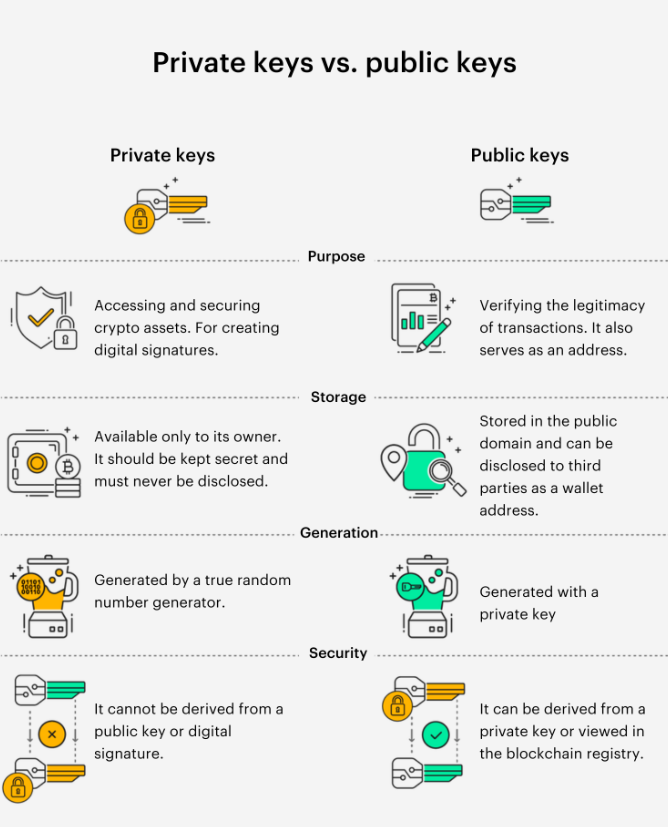
The majority of crypto thefts and losses are not the result of users failing to understand elliptic curve cryptography. They are the result of users failing to understand the analogy they’ve been sold, and the mental model they’ve been asked to adopt. They guarded the wrong thing, trusted the wrong thing, and failed to recognize the threat when it was obvious because they did not understand how the wallet worked in the first place.
Better Mental Model
The cleaner version of the analogy is that the blockchain is a vault, the address is a cell number, the private key is the key, the wallet is the keychain and the signing device, and the exchange is another custodian with its own vault, cell numbers, and keys.
With this analogy in mind, many of the problems that befuddle new users are far easier to understand and far less frightening. If I lose my phone, but I have my recovery phrase secured somewhere safe, I can recreate the keychain and regain access to my vault. If someone sees my public key, they can send funds to my address or inspect the vault, but they cannot open the vault. If someone gets my private key or my recovery phrase, they can open the vault. If Coinbase has my keys, Coinbase can open the vault, and I cannot do anything about it from my account on Coinbase’s website. If my Ledger has my keys, my coins are still in the vault, and the Ledger is only inspecting the vault and signing requests to open it.
This analogy also helps explain why self-custody is simultaneously an empowering and a terrifying prospect. There is no central authority to turn to if you make a mistake. There is no built-in undo button. If you lose your keys, there is no magical customer support that can recreate them for you, unless you lied to yourself and chose a custodial wallet. Self-custody places the responsibility for your assets directly on your shoulders, which is simultaneously why it is so appealing and why it is so frightening.
This does not mean that everyone who wants to be safer should immediately start using a self-custody wallet. It means that everyone who wants to be safer should carefully assess their threat model and their ability to mitigate risks before choosing a wallet that matches their threat model. Some people are far safer using a custodial exchange. Some people should practice self-custody with small amounts before graduating to larger deposits. Some people should use hardware wallets. Some people should use multisig. Some people should use separate wallets for their savings, spending, DeFi, NFTs, and testing. The details matter, and the details are different for everyone.
What matters most is that everyone understands the wallet they are using, and the risks associated with it. A Coinbase account is not the same thing as a Phantom wallet, which is not the same thing as a Ledger wallet, which is not the same thing as a cold storage vault. A recovery phrase is not a customer-service password. A balance is not a guarantee that the thing you’re looking at is safe. A wallet is not a vault; it is a tool for interacting with a vault by way of cryptographic keys.
With that understanding, crypto becomes less intimidating, and more practical. You stop thinking about where your coins are, and you start thinking about who controls your keys, and what they can do with them. You ask less silly questions, and more practical ones. Who controls the keys? Where can the keys be compromised? What exactly am I signing? Which chain am I actually on? Is this an exchange balance or a blockchain address? Can I recover these keys without the assistance of a company? Can a company stop me from doing something? Can someone trick me into doing something?
Those are not nearly as interesting questions as “How much is this worth?”, but they are far more important. The funny thing about the wrong analogy is that it makes you feel both safer and more vulnerable at the same time. You feel safer because the familiar object reassures you, and you feel more vulnerable because you recognize the flaws in the familiar object. In reality, crypto is simultaneously as safe and as unsafe as you are capable of making it. The blockchain itself does not care if you use a wallet, a hardware signer, an exchange, or a bank. It only accepts valid signatures and rejects invalid ones. In crypto, the key is the king.
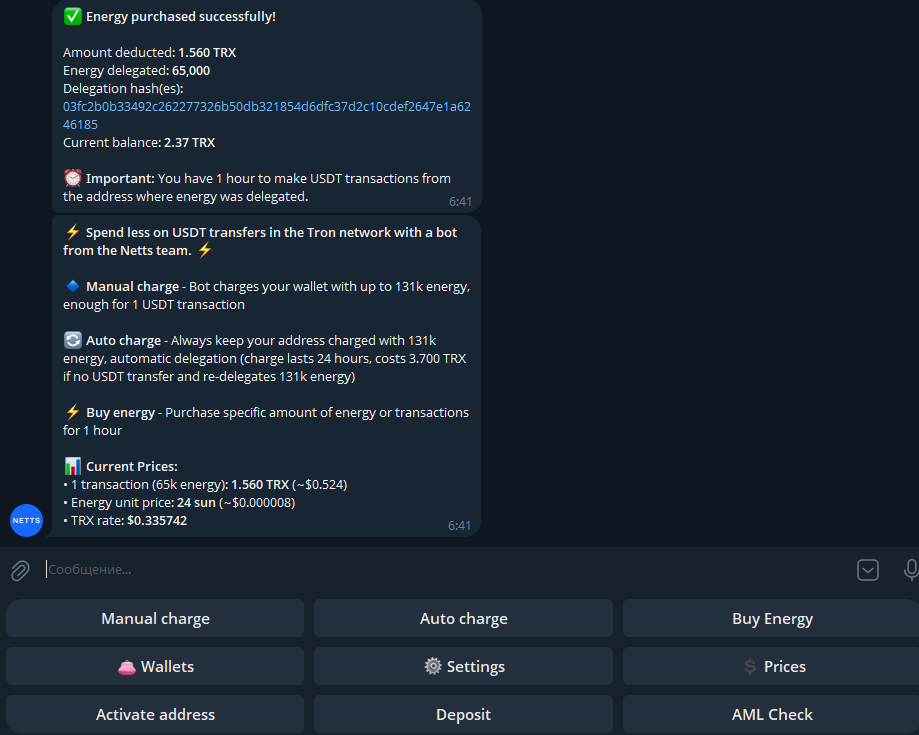
In addition, when a user realizes that the wallet is indeed a critical component of the blockchain record-keeping system, the importance of small utility solutions becomes even clearer. Netts Energy Charge Bot fits in perfectly by helping TRON users utilize Energy to make USDT transfers cheaper: a single click charges the address with enough Energy for one transaction; auto-charge keeps the address stocked; users can purchase Energy for a short period to pay for the TRON Energy topup, recharge TRON Energy, and reduce TRON fees in general without wasting TRX on unnecessary operations. It is not about the location of the USDT within the wallet: it is about ensuring the signing address has sufficient Energy and Bandwidth to make any given transaction cheap.