Decentralized Cosmos: the Blockchain Space Odyssey
Space was always for governments and billionaires — until tokenized satellites, DePIN infrastructure, asteroid mining legislation and on-orbit blockchain nodes.

There is a venerable tradition of treating space as somebody else's problem. In the most literal way, it was — for neither of those had existed separately as fields of study until well into the twentieth century. Most people had a passive relationship to what went on outside the atmosphere: you watched launches on TV, read about them in the paper, and maybe felt a little resonant excitement when something worked. The institutions that did not give you a seat at the table, did not need your vote of confidence, and only received money from a source that had nothing to do with you but gave them power over your world.
That arrangement is shifting faster than most of the coverage of this space industry is willing to acknowledge. According to Space Foundation data, the global space economy is worth about $570 billion in 2023; many investment banks predict that it will cross the $1 trillion threshold before 2035 and might rise as high as an astonishing $1.8 trillion by 2040. Much of that growth will not be generated by government programs. This in-turn will be derived from commercial activities including satellite services, manufacturing content in-orbit, space tourism, markets for Earth observation data and ultimately extracting resources from off-Earth. The final design of that economy, most of which is being constructed on blockchain right now.
Last but not least, the geopolitical aspect of space is important to mention as it relates directly with why decentralized infrastructure appears as a natural suited layer for the space economy. Space is one of the rare realms in which geopolitical animosities habitually yield to operational imperatives. Some of the most difficult moments in post-Cold War relations between the United States and Russia were lightened by collaboration on the International Space Station. In a planetary long term perspective the national lines evaporate for emergency astronaut rescue protocols, because the other variation is not bearable. The orbital environment is a commons with commons vulnerabilities, and the organizations that manage it — regardless of flag flown — have found that some coordination problems are easier to resolve without a single party controlling the solution. At least at a high level of architecture, this is the exact kind of problem that decentralized networks were built to solve.
Blockchain Reaches Orbit
Founded in 2017 and headquartered in Singapore, SpaceChain constructed and sent blockchain nodes into orbit — one node was launched to the International Space Station on a Falcon 9 rocket in 2019, later followed by other nodes through subsequent launches on other vehicles. SpaceChain is based on the notion that a blockchain node in orbit cannot be physically attacked, its hardware cannot be seized and because it can sign financial transactions from space, will not answer to any national government. Use cases include multi-signature cryptocurrency wallets that require authorization from space for greater cash channels, are backed by satellites anchoring data to on the ground, and distribute networks where users with orbital hardware act as Byzantine fault-tolerant nodes over a certain set of actors.
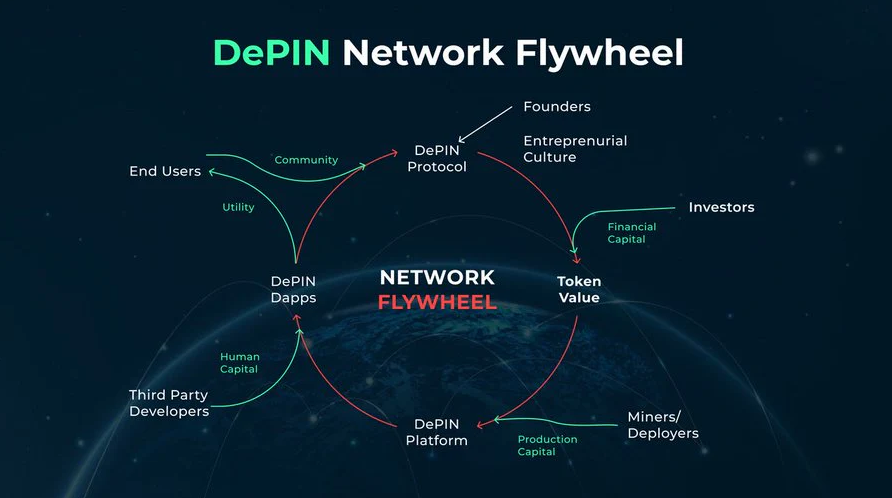
DePIN — Decentralized Physical Infrastructure Networks, is without doubt amongst the most popular new frameworks in crypto discussions for reasons outside of space but unsurprisingly its applicability relates closely to orbital infrastructure. DePIN projects incentivize private operators — wireless base stations, storage hardware, sensors — to deploy physical infrastructure by rewarding them with tokens for using their resource in a shared network. Helium started life as a decentralized wireless network but quickly proved that this model can capture real-world infrastructure at a tiny fraction of the cost for centralized custodians, because just like token economics dictates most things in protocols, deployment costs are spread across thousands of independent operators who are incentivized to compete. A natural extension of this model, which several projects are now exploring, is its application to satellite ground stations (where network participants operate satellite data receivers and relay within the coverage area), so that they could earn tokens for sat coverage.
Data from earth observation is already a multi-billion dollar business, with commercial satellite operators selling imagery and analytics to governments, agriculture, insurance companies and logistics operators. This means the current market is very concentrated around a small number of large commercial operators for which data access comes at proportionately higher prices. In Earth observation, a potential DePIN model could establish a tokenized marketplace for satellite data with the protocol replacing bilateral agreements between satellite operators, data processors and end users. These tokens are earned by the satellite operator for data. The processor makes tokens to analyze. The end user pays in tokens for what they require. Data can be priced dynamically based on demand, unlike a traditional system where the terms are centralised.
Firms Creating the Financial Infrastructure
Copernic Space is a space asset marketplace: A platform to list your physical and intellectual assets of the space industry — for tokenization and trade by a global investor base. The platform is constructed to handle a diversity of asset classes from satellite capacity, launch slots, spectrum licenses and ground station services all the way through intellectual property related to space technology. This should allow investors with no way to currently access space assets either at all or only after significant barriers to whatever a token represents. This translates, in praxis, into transforming a space industry that has been capital-starved and institutionally shuttered into one where more pools of capital can play.
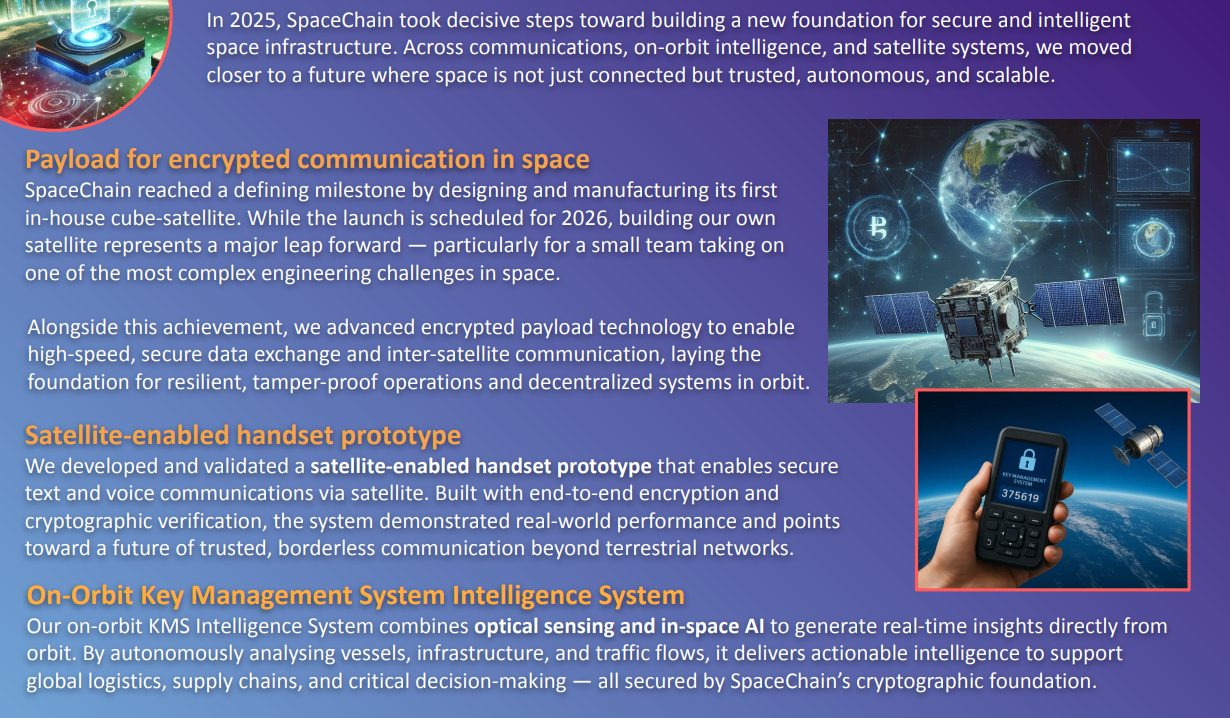
SpaceChain takes a more infrastructure-oriented approach than that — it is constructing an orbital layer of the decentralised network, not a marketplace. That focus is reflected in its partnerships with ESA (the European Space Agency) and multiple commercial launch operators, which recognizes that getting hardware to orbit requires collaborating with well established players even while constructing infrastructure intended to operate independently of them. While both orbital nodes and the currently deployed ground-based network infrastructure create an interlaced system where physical space returns a level of censorship resistance and security far greater then any purely ground based blockchaining alternative.
Other companies and protocols take specific niches of this new field. While commercial Earth observation company Spire Global has investigated blockchain data provenance systems to cryptographically verifiably prove that satellite-derived data goes unchanged from point of capture rather than as point of sale — a valuable sell for legal, insurance or compliance-quality data. Some of the projects in the DePIN space have focused their attention on satellite ground stations due to one particular observation — that is, how many satellites can downlink its data (after processing it for example) also depends on the density of groundstations. The tokenization model is already starting to manifest itself in space research funding contexts where DAOs or other forms of token-based crowdfunding mechanisms are proposed as viable alternatives in lieu of traditional grant systems for mission or scientific instrument funding.
There are commonalities between the leaders in this space. They are operating at the intersection of hardware (which necessitates regulatory conversations with launch authorities, frequency regulators and orbital debris standard setters), and software infra which will be operating in the more permissive domain of blockchain development. The regulatory stack for a tokenized satellite is orders of magnitude more complex than for a tokenized financial instrument, and the teams that have made the best progress have done so by treating the regulatory dimension as a design constraint rather than an impediment. As an example of this, SpaceChain's partnership with ESA is a model: instead of placing blockchain as something against existing space institutions, it identified the use cases within those institutions that leverage the properties of blockchain and built from there.
No more wild ideas, an idea for something that can no longer be described as a wild idea
The economic logic of asteroid mining was figured out long before the technology to carry it out existed, and the answer was sobering: a single fairly small metallic asteroid possesses iron, nickel, cobalt, platinum–group metals and rare earth elements at concentrations that — if brought to market today at 2020 prices — would be multiples of global production for all these materials. The true scarcity of these materials on Earth is along geological but, more importantly, political and logistical lines — their mining occurs exclusively in a small number of countries (some even call it coltan) and controlled by an even smaller stool comprised also only a handful of operators. Any off-world supply would completely alter the economics of every dependent technology.
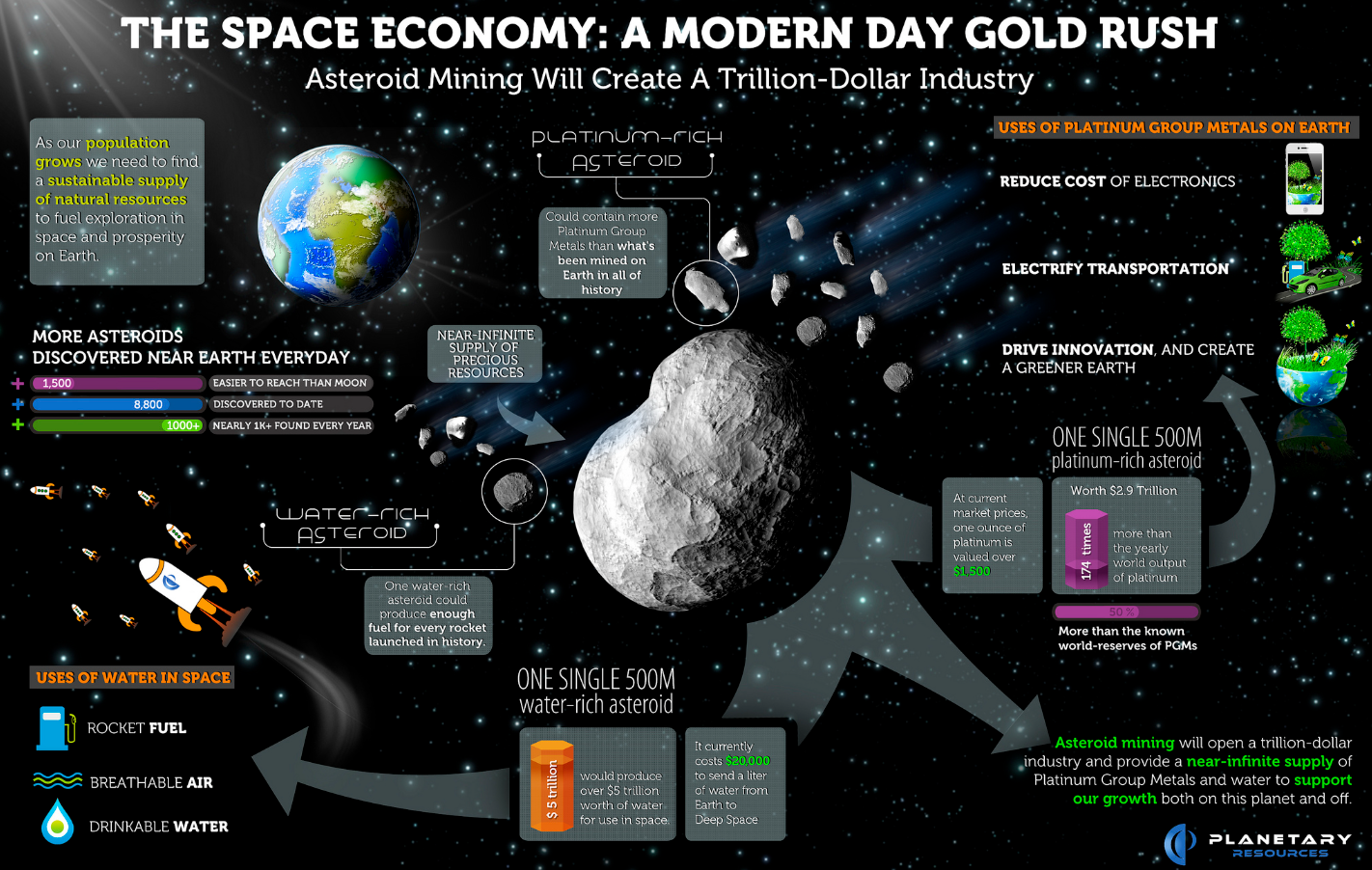
The US Commercial Space Launch Competitiveness Act, enacted into law in 2015, became the first step toward property rights for space resources by providing a legal basis for American citizens to own resources extracted from celestial bodies. It was followed by similar legislation in Luxembourg and other jurisdictions have looked at comparable frameworks. Outbound, legal uncertainty exists around resource rights in space, and competing frameworks arguably create rebuttable presumptions against their legality rather than concrete prohibitions. Before being acquired, and subsequently reorganized, companies such as Planetary Resources and Deep Space Industries were investigating the technical and economic potential of asteroid mining; development of the necessary technology continues under other entities.
The blockchain link has not grown out of this in an incidental way. A mined asteroid outputs varying quantity & composition based on the body type. How extracted material can be transported from orbit to a point at which it can be used or sold may require financial instruments that represent forward contracts on delivery, insurance against mission failure and fractional ownership of the output. This is the kind of problems for which you have DeFi protocols. An asteroid mining operation that had been tokenized could sell ownership shares of the mission, create tokens with each backed by a certain volume of ore mined and then distribute earnings through smart contracts when material was delivered. The need for — and the difficulty of achieving — trustless performance of these arrangements, since counterparties may be located in separate jurisdictions that lack a common legal framework, makes blockchain a sensible option rather than one that is being pursued simply because it is fashionable.
Space tourism, meanwhile — the most business-ready corner of private space has already adopted crypto payments in different ways. The SpaceX Starship program, an almost totally reusable vehicle that is the latest in heavy-lift commercial access to orbit, comes by way of a company well-versed in cryptocurrency acceptance on multiple levels. Whereas Blue Origin and Virgin Galactic have operated on some kind of consumer market, crypto holders are a customer cohort that seems just demographically plausible to spend hundreds of thousands of dollars on tickets. What is a little more interesting as a long-term model — that I am not posing crypto as a payment method, but rather as a mechanism for fractionalising access where groups of token holders co-own access to, say, the slot of flight just like they might collectively own fraction shares of commercial property.
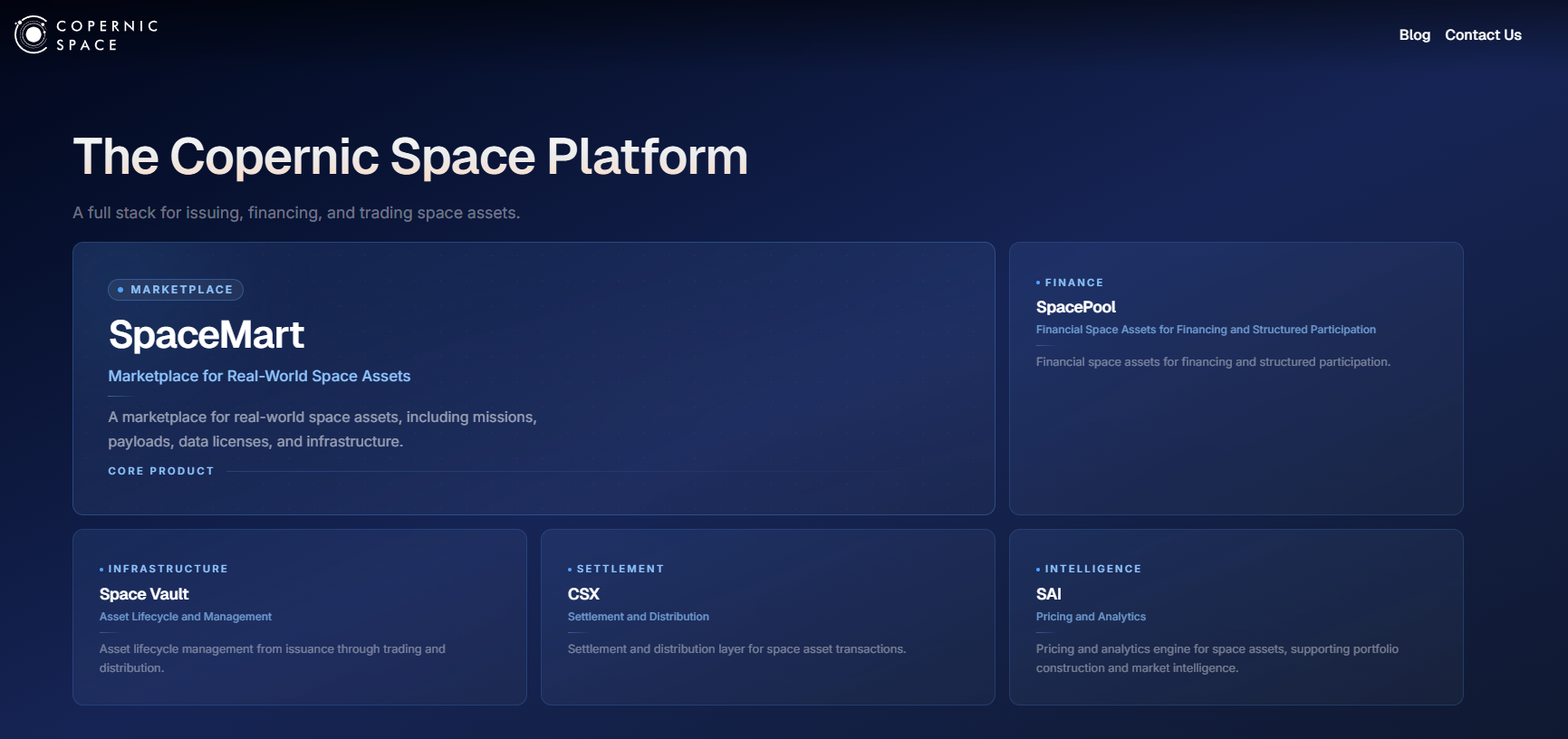
Some of the current-generation commercial space stations are laying the groundwork to make in-orbit manufacturing a potential longer-term reality. Microgravity can make some products — pharmaceutical crystals, fiber optic cable with properties unattainable on Earth, certain semiconductor structures — better than what is possible in Earth gravity. Axiom Space, creating the first commercial modules to dock with ISS has deals with manufacturers studying exactly these use cases. Similar to the satellite tokenization models that platforms like Copernic Space are building, manufacturing capacity in orbit could be reserved and traded through a process of microgravity environment tokenization.
Your Ticket Beyond the Atmosphere
Blockchain enables the biggest change in the space economy not at a technological level. It is participatory. Until now, we have seen that the question of who gets to own the assets and who agrees to manage the investment has been answered by institutional defaults — state agencies and, in recent years, a limited amount of billionaire-backed private companies. Capital was centralised, and so were decisions.
Tokenization moves the goal post on what is considered a minimum investment. An instrument, which used to have a minimum buy-in of $10 million in order to be touched — an ownership share of a satellite constellation or reservation of manufacturing capacity in orbit or revenue take from some Earth observation data stream — when tokenized allows you to buy fractions too. This is not a promise on returns or great investment advice. It is an assurance of access that was not previously. Five years ago you could go invest in a publicly traded aerospace contractor — but this is just a company where space is one of many divisions and duties; the average person wanting to have financial skin in the development of the space economy — directly, in a space focused asset, now has infrastructure through which to do it.
And the governance dimension of it matters too. Inverting this model, a tokenized space project can create a global constituency by providing governance rights (through tokens) to project stakeholders on mission parameters or resource allocation and/or expansion plans. This is different qualitatively than a public that has a very passive relationship to government space programs where the only leverage available is political pressure exerted over electoral cycles having no direct corollary to mission success. Whatever its operational limitations, a DAO governed space project can offer those participating in it more of a direct line from their investment to where things go.
An actual concept of what an engaged participant in the emerging space economy can accomplish — a numbered list:
Buy tokens representing fractional ownership of or revenue rights to space assets on platforms such as Copernic Space.
Join DePIN networks that launch on-the-ground infrastructure to enable satellite data relay and earn tokens by running those receiving ground stations.
Invest in tokenized launch slots/satellite capacity up to where additional demand for services can be easily resold.
Vote in governance for DAO-governed space research or infrastructure projects.
Price exposure earlier than any public market would allow, hold tokens in companies building orbital mining or other in-orbit manufacturing capability.
None of this is without risk. The space industry has witnessed some technically great, economically awful projects throughout its long and storied history, and neither tokenization provides magic fairy dust that will alter the laws of physics or the launch failure rate. However it definitely alters both the capital structure and accessibility. The buyer of a hundred dollars worth of tokenized satellite data network is speculating on an nascent industry — the same speculation, or at least a much smaller version thereof, institutional investors have performed for decades in traditional space enterprises. The decentralized version is messier, less regulated and easier to access. As for whether that mix ultimately yields up for better outcomes for the space economy, only time will tell. The experiment is underway.
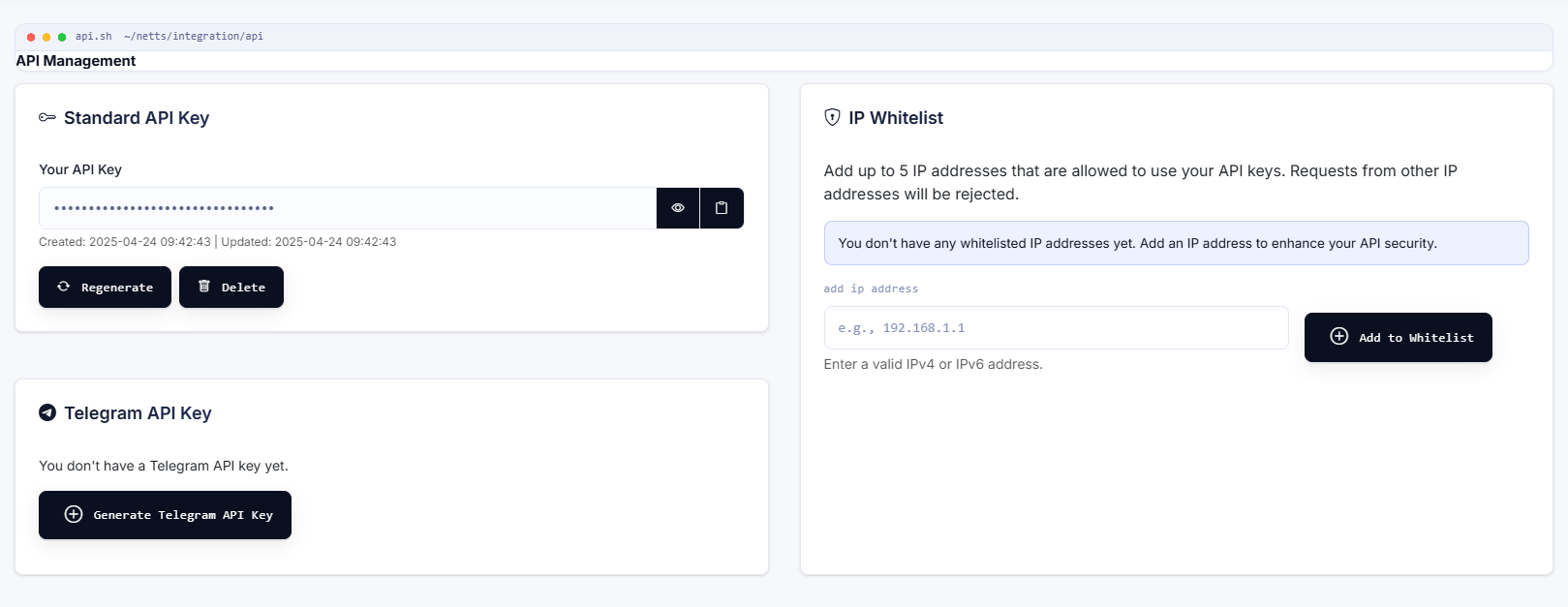
The ongoing operational overhead of managing Energy manually becomes a binding constraint at scale for projects building on TRON where such high-volume transaction flows are required e.g. any tokenized space asset marketplace given the frequent microtransactions in a data marketplace or the automation of Energy purchases required to sustain continuous smart contract operations. This is where Netts Workspace comes in with an enterprise-grade platform offering an API for TRON Energy allowing fast development teams to integrate Energy delegation into their backend infrastructure through programmatic Energy management, automated smart-mode triggers that maintain required Energy levels without manual intervention, and full financial tracking for operations then (and the many thousands of addresses they require) — a level of professional infrastructure any serious application near or far from Earth eventually needs.