Crypto and Voting: Democracy or Chaos?
Governance tokens and on-chain proposals sound convincing on paper — until you see a community spend six months arguing over a parameter nobody understands.
When you vote on something that matters to you for the first time, a little chemical event occurs in your brain and this chemistry has very little to do with whether or not your vote goes to be on the winning side. You feel useful. You feel informed. You are no longer a human, your opinion now seems like something other humans should treat as legitimate even though this is the same opinion you had five minutes ago when you were not yet empowered by the dignity of going and voting on it. The opinion has not changed. You have changed. Voting has transformed you from a someone-who-thinks-things into a someone-who-has-decided, and the brain distinguishes between those markers in entirely different ways.
This is not a flaw in human cognition. That's a feature not a bug, and it has worked that way for as long as humans have been making decisions in groups. Those behavioral researchers studying political participation know the causality is reversed from that of the standard civic-education narrative. You are not voting because you are involved. They take part, because they have voted. Casting a ballot — especially in public and especially with something at stake — generates a previously nonexistent internal commitment, which then guides every following action from how closely you monitor the results to how angrily you defend your last choice several weeks after the fact. Participation is what creates the sense of mattering. It is part of it but not a prerequisite for it.
This is ok for a national elections. One vote is a true zero in maths, the dopamine hit of casting it is small and that small civic illusion of having made a difference provides useful sticking power to holding up the system. Now take that same psychological mechanism, and amplify it to a context in which your mere vote can becomes the swing-weight on a proposal governing hundreds of millions of dollars (of real assets) at real time. Dopamine is no longer shy. The illusion is now half-true. You certainly have power — in a limited but unmistakable way. And your brain, which has spent all of human evolution calibrating itself for the absence of that, is completely lost.
It is what crypto governance is at the scale of the individual: software that turns your small civic sense of sitting in a booth shoving paper into a box up to 11. Until very recently, the designers of even the first DAO architectures were not thinking similarly about brain chemistry. They were considering decentralizing the power to make decisions such that no founder can rug a protocol by themselves. They achieved exactly that. They also, inadvertently constructed an environment in which non-sociopathic humans feel real power over institutions — often for the first time — and that feeling does things to people no one on the design team thought through and most of those who are experiencing it cannot articulate as it's happening.
When Click Becomes the Needle
Something like a post is found in the DAO hub forum directly following any significant voting. The author (of course, with a cartoon animal as an avatar with a pseudonymous account) explains in painstaking detail after the fact how brilliant (or awful/nigh cataclysmic; depending on who the author was rooting for) this vote turnout outcome was. It is often technically well-informed but poorly argued, and the author would most likely have produced (quite) different arguments if he had not already cast his vote. The vote came first. The conviction came second. Reasoning that had been constructed afterward to justify a decision already made.
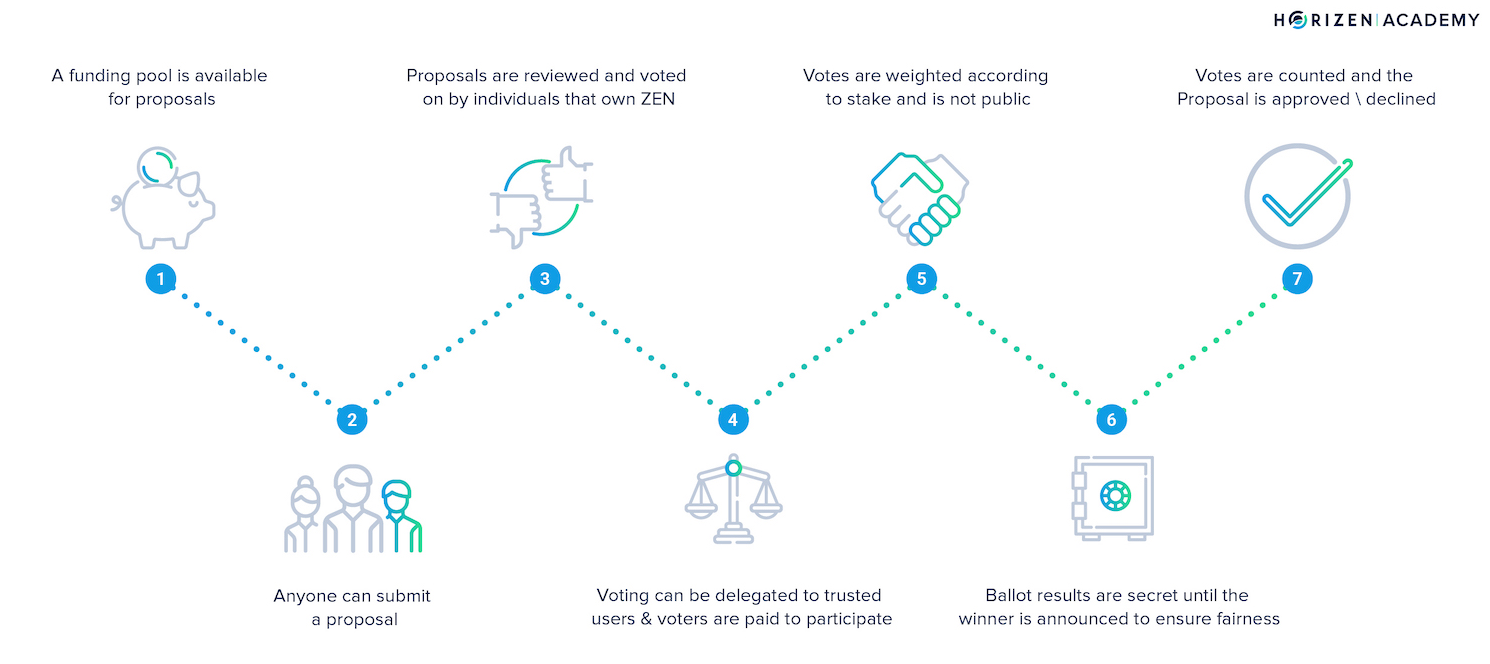
This is not cynicism. This is the primitive function of cognitive dissonance reduction, it manifests itself in any voting system that has ever existed. But when you make a public commitment to an outcome, your brain starts skewing any incoming information about that particular outcome heavier. Evidence in your favor is categorized as confirming. Evidence for/proof against goes into either suspicious or motivated. It continues even when the voter understands that bias and attempts to counteract it. Once you have voted on a change in the interest rate for Compound, or vote to assign a weight to this gauge or that one at Curve, you have crossed an invisible threshold which will forever alter your ability to assess the subsequent decision with any kind of clarity: now if that decision could have been anything other than wise, then how will you ever be able to think of yourself as someone who understands these things.
The forums know this. But a coordinated campaign for or against a proposal does not have to sway the biggest holders, who likely already have positions. It has to convert the medium holders, because once they vote, they become non-paid marketing agents for whichever way they landed. They will defend their stake in public, bring on their buddies, post threads on Twitter, get into arguments on Discord. The conversion event was the vote. My guess is that much of what follows is the campaign reaping what it just spent so many resources to manufacture but at no cost to itself. Every governance campaigner knows this dynamic instinctively. They might not articulate it this way, but most of them would agree.
This is especially ironic for DAOs that brand themselves as being more rational than old-fashioned political institutions. They run on the same psychological hardware that every voting institution in human history has ever run on and they are running it at much higher resolution and higher speed. Your average person, who has never paid attention to a city council meeting in their life, spends eight hours of a Saturday reading the forty page proposal on parameter changes to some protocol stake tokens where they own $300 worth and arguing against trolls on Discord defending their vote for the next week. Even though the proposal is technical — not political — it does not change one bit about what counts in the underlying dynamics. Not that the rationalizations use different words.
Researchers' Dilemma
In any governance system, the people who are thought to be the most active participants experience a particular failure mode that crypto governance has brought to the surface at a clarity of political science one had no means of studying before.
The voter who has invested forty hours in a proposal — reading documentation, modeling the second-order effects, debating in the forum, writing a longform take — has put a non-negligible amount of personal time (and identity) into being right about it. By the time this person votes, this person is not evaluating the proposal anymore. They are defending a position they have long-held, against critics they have already defined, with arguments they have already rehearsed. The analysis was real. The conclusion is now set in stone to a degree that the voter can not easily undo without incurring a social cost of reputation they did not calculate beforehand.
The curse of having done the work is exactly this. The people in the best position to really judge a governance question are usually those who don't care about it much — who haven't tied their identity to being right, who can read the docs prior without having their current opinion shaped by leaning pro or con, and can vote either way at basically no cost. Most of these people, generally speaking, do not vote. For them, they are too detached from the system to even try to do it. In DAO governance, the participation problem is not that uninformed people are voting. That is that the structure of engagement systematically disallows the cleanest judges. The most engaged participant is also the most dedicated to a resolution. The most committed has something to gain, and have gone on to do better things.
This is known as commitment escalation by behavioral economists. The DeFi version runs exactly the same way and yield identical results — steadfast, elaborate, self-consistent rationale leading towards conclusions that become further and further removed from what is being actually proposed. Everyone who has been in a real deal governance forum has seen it happen to others. If you have been that person it has happened to, you have at some point, posted something and wished there was a delete button. It is not about being right. The ability to update your opinions weakens in relative proportion to how publicly you have committed your previous beliefs.
There is nothing new and bad actors learned to weaponize all of this directly. Using over a billion dollars in flash loans, the perpetrator briefly secured a two-thirds supermajority of governance tokens for the Beanstalk stablecoin protocol, after which they forwarded a pernicious proposal that redirected the treasury to their own address and then repaid the loans all within the same block - pocketing an astounding $182 million in beanstalk assets by April 2022. No code was broken. Well, the system performed as prescribed: a majority voted and in due course the vote was executed by the contract. The design was not equipped to ask questions about the fact that most were made over the course of an individual transaction. As in the case of the May 2023 Tornado Cash governance attack, where a rogue proposal masquerading as an ordinary action obtained >1.2M votes vs ~700K legitimate ones. The perpetrators were not exploiting bugs. They were exploiting the vote.
How similar individuals continue to vote
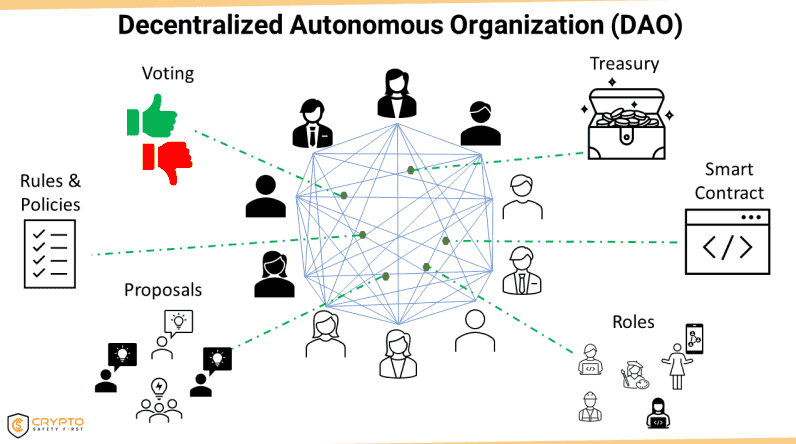
As you have followed any major DAO long enough you begin to learn the names. Every significant thread is flooded with posts from the same fifteen accounts. We find five recurring delegates amassing the largest proxy holdings. The same three characters bicker in the comment threads, sometimes about real issues and sometimes about old score-settling. Governance becomes a community like your small town is a community — everybody knows each other, personal conflicts are as much ideological ones as they are personal, and patterns of supporting this or opposing that will have been instilled in stable ways because they seems like the only way it indeed works anyway.
That is the social fabric that voting creates, and it is neither an accident nor a corruption. That is what happens to any group that votes together for long enough. Regular voters become acquainted with other regular voters. Coalitions form because coalitions make preferred outcomes occur and they are maintained because the relationships begin to be valued above any isolated vote. The governance forum becomes an alternate social network, with its own status ladder, its own reputation economy, and its own tribal wars. Outside coverage of DAOs shows none of this. Spend a week reading any major protocol's forum and it's immediately apparent.
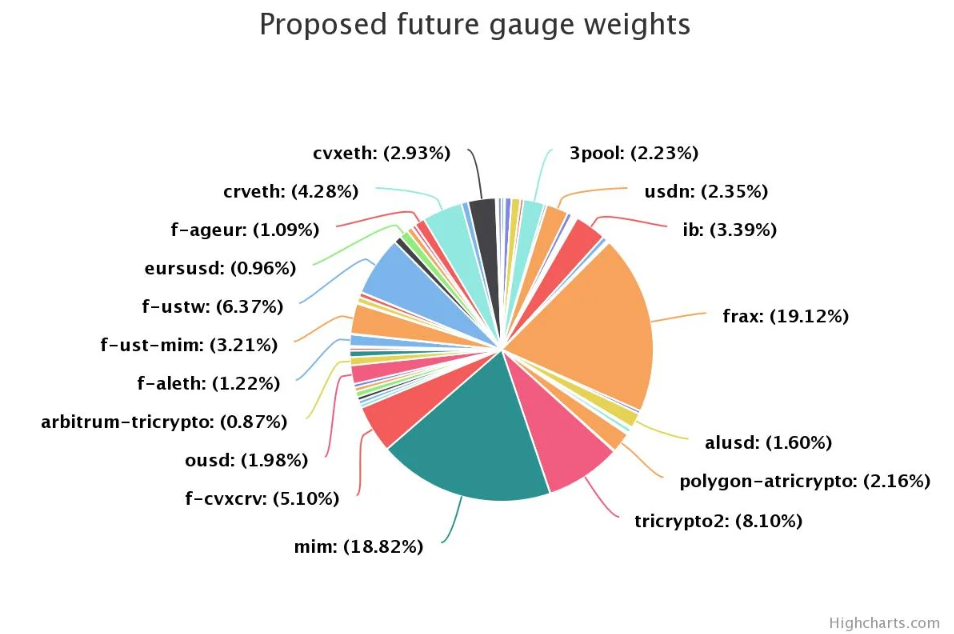
2021 and 2022 proved to be the proving ground of what occurs when social layer meets financial layer at max charge, aka The Curve Wars. Hundreds of millions were not sucked into vote-escrowed CRV for principled perspectives on Curve design, but rather because by controlling weights on governance gauges they got the cash. Convex Finance ended up with more than 40 percent of veCRV. The governance was reflected through regular market mechanisms, conducted by people who knew each other from forums and conferences and prior protocols. It was social as much as financial (the capture). It worked because the universe of people who take part in governance is much smaller than it appears from the outside, and within that universe, most of the people who actually make decisions are personally familiar with one another.
Vote-trading is the natural conclusion. Log-rolling — I'll support your bill if you support mine — takes place implicitly in traditional politics and at times, it is even illegal. This is explicit in DAOs, usually with a token (which has its own price), and is normalized as part of what it means to govern. These bribe markets that sprung up around Curve and alike protocols are not an outlier. This is governance at the level of social complexity which any big political system eventually produces, except this time the negotiation happens in plain sight and is denominated in tokens. The participants are no less ethical than traditional political operatives. They are working within a system, stripped of some linguistic masquerades.
Voting Anyway
The conclusion they are tempted to draw is that on chain governance is theatrical, and protocols would be better off with smaller executive teams, held accountable. The temptation must be avoided, chiefly because in certain directions the alternative is worse, though often less obvious and much more reliably calamitous.
A governance-less protocol is a protocol where the direction of the project relies totally on those that hold the keys. Insofar as those people are capable, of goodwill, and in the same space as users? that's all fine. The moment any one of those conditions breaks — through capture, through losing a judgment in a moment of heat — there are no refunds. This is where we get into a lengthy list of projects in the history of crypto where this has happened, with that list continuing to grow. Through governance, the friction you create means one really bad day does not end up being terminal for your company. It's doing this poorly and at massive expense, but the cost of going without it is also not zero. It is simply less visible, until it becomes total.
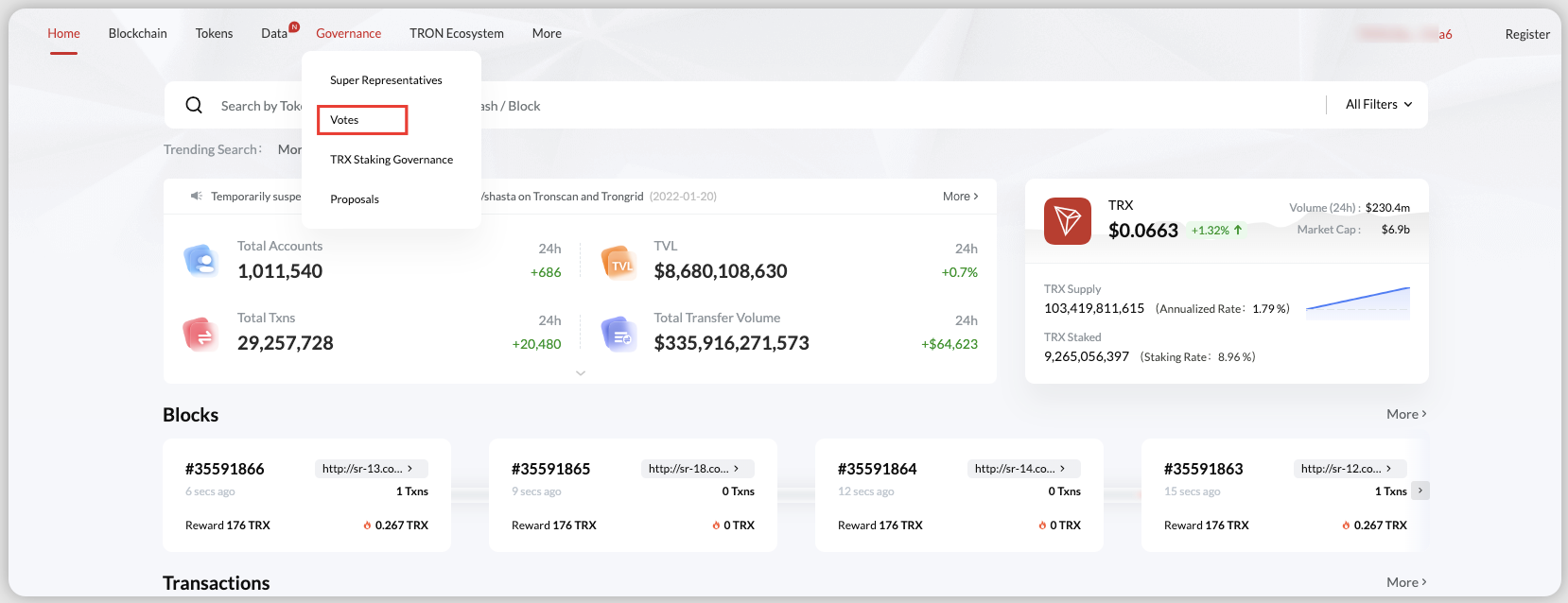
At the same time, TRON's Super Representative model demonstrates what a more intentional construct can do. Block validation and other operational decisions will be made by a group of 27 elected representatives, continuously re-elected every six hours based on votes from TRX holders. Are accountable and can be dismissed, are limited in scope so not every parameter change needs to go through a community referendum. The Energy and Bandwidth architecture for TRON transaction costs exists, in part, because that governance structure could be implemented without needing universal consensus first. With a solid design, it has long been able to sustain an advanced energy market where TRON Energy prices are live and competitive across providers, and users refill TRON Energy through a diverse array of competing external services rather than being forced to rely on a single on-chain solution. The structure does not resolve the psychology issues. It just contains them.
The best governance designs in practice have certain commonalities. They tend to:
Keep routine operational decisions distinct from big structural changes so a Vote to Change the protocol cannot paralyze it by requiring votes on minor adjustments.
Introduce timelocks between passing and execution of proposals to give the community a chance to identify malicious proposals before they become effective.
Articulate governance scope, separating both a non-amendable constitutional layer and an operational layer in which regular voting takes place.
Decisions that are based upon technical skills or immediate response should not use direct democracy, but representative structures.
Maybe set participation thresholds which require real effort but aren't so high that just whales can contain them.
None of this is novel. What political institutions have deployed for centuries. What is really remarkable is just how little of it has been applied to blockchain protocols and what an expensive lesson those that didn't learn this have had to pay.
The actual reasoning behind governance voting is not that it leads to the right decisions. The reason it does that is because it puts the people running the protocol on notice to justify their decisions to those affected, and as a result of this friction actually constitutes the same friction that defends against unilateral capture. The observer's appeal is based on the fact that a protocol can be taken over overnight by whoever controls the keys, which will change from tomorrow. That kind of friction that frustrates legitimate operators frustrates attackers in the exact same proportion. When billions are at stake, that tradeoff is one worth making.
That's because the honest case for crypto governance is that it does not work very well, because all the people who have it are people, and we know how people behave in predictable patterns that lead to predictable failure modes. The dopamine high of elections is not going away. The curse of having done the work is not going to be argued out of. The social fabric of governance communities will keep generating the same factional dynamics that every voting body throughout history has generated. The trick is whether institutions can be structured to close off these dynamics and produce results that are, even if not desirable, bearable most of the time. While the answer to this question is yes, the method is effortful, humble and always aware of how anyone who has ever thought that they have stepped outside the design space of every other voting system in history is nearly universally embedded smack in their midst.
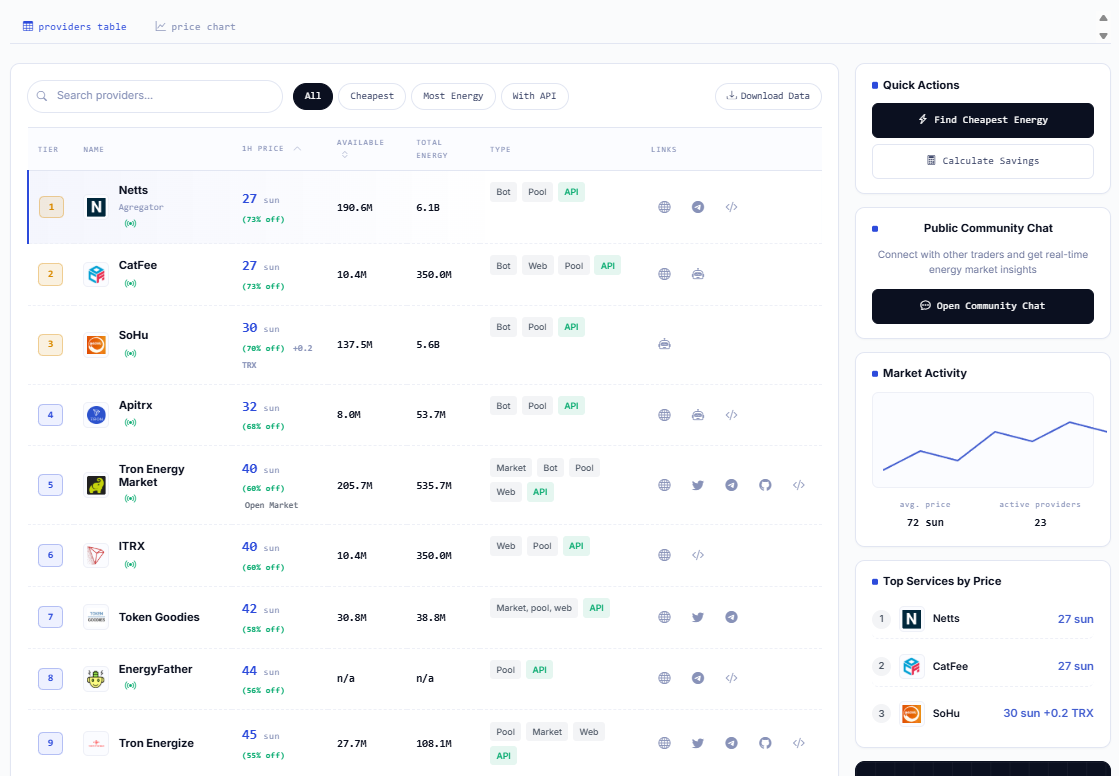
For TRON users looking to top-up on TRON Energy ahead of a USDT transaction, Netts pulls live rates from over twenty Energy providers in real time and processes every transaction using the lowest cost available TRON Energy — currently 25 sun per unit is being sold by multiple providers; if burn rate was reverted back to normal this would translate roughly to more than a 75% discount against default price. This full comparison can be viewed within one interface rather than checking sites for individual provider listings directly. A more obvious side effect of TRON's governance design is the functioning energy market, which functions not in the shadow but rather alongside one you are certain to be passing on — and using it effectively is likely among the lowest-hanging fruit accessible to anyone moving stablecoins at all, let alone at scale.